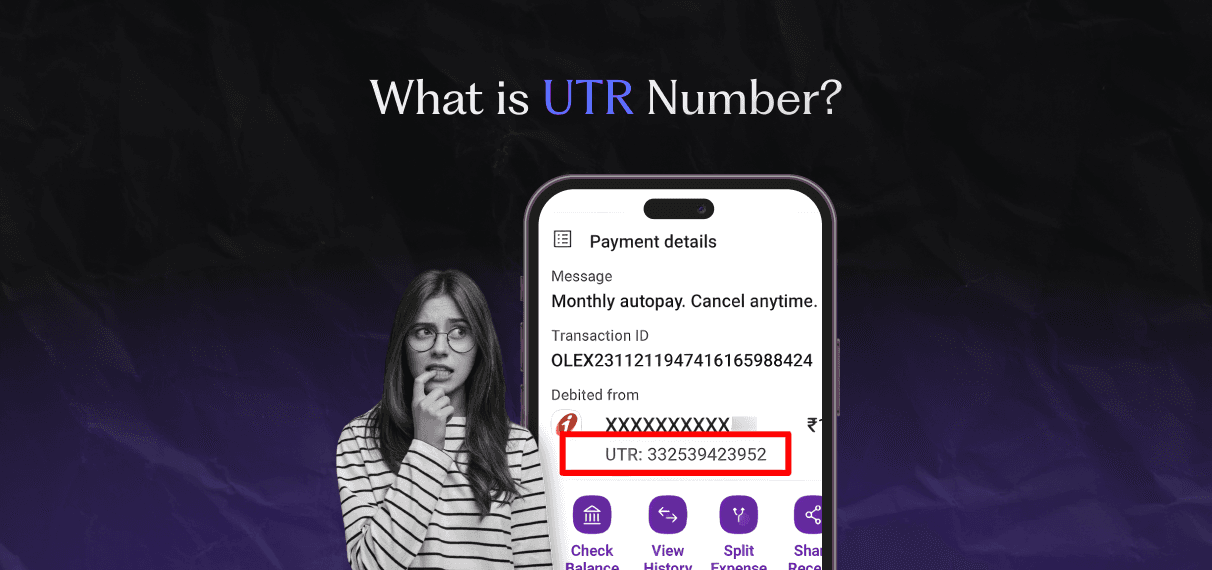
The UTR number, short for Unique Transaction Reference number, identifies specific transactions within India. It's a distinct number generated by the bank overseeing the transfer process, primarily designed to facilitate the recognition of any fund transfer.
In simple words, each transaction is assigned a unique UTR Number, making it easy to track that specific transaction.
Why is a UTR number necessary, and what does it serve?
The primary function of a UTR number is to identify and oversee financial transactions. It tracks fund transfers, mainly when transactions encounter delays, take longer than expected, or for reference purposes.
In India, a UTR is assigned while transferring money between two bank accounts.
There are two main methods for transferring funds between accounts held in different banks within India: NEFT and RTGS. Regardless of the chosen method, a UTR is generated for NEFT and RTGS transactions.
How do I get the UTR Number of any transaction?
When you initiate a bank transaction, and the funds are debited from your account, the bank typically sends you a notification via SMS confirming the transaction. Within this SMS, you'll find crucial details regarding the transaction, including the UTR (Unique Transaction Reference) number or a reference number associated with the transaction.
The UTR number is a unique identifier assigned to each financial transaction conducted through electronic payment systems like NEFT (National Electronic Funds Transfer) or RTGS (Real-Time Gross Settlement).
In addition to receiving the UTR number through SMS, you can also find it under the transaction details within your bank's online banking portal or mobile banking application. Accessing the transaction details provides you with comprehensive information about the transfer, including the date and time of the transaction, the beneficiary's account details, the amount transferred, and any associated charges.
What is the Format of a UTR Number?
UTR Numbers come in two formats: 16 or 22 characters in length, depending on the type of transaction they correspond to. UTR Numbers for RTGS transactions consist of 22 characters, while those for NEFT transactions are 16 characters long.
How can you track the status of a transaction using a UTR number?
You can track the status of a transaction using the UTR number through two methods:
Log in to your Internet banking account or access the mobile banking app provided by your bank. Navigate to the section for past transfers and input the UTR number associated with the transaction you wish to track. The status of the transaction should then be displayed.
Alternatively, you can contact your bank's customer care service via phone. Provide them with the 16-digit UTR number, and they will assist you by providing an update on the transaction status.
Is it considered safe to disclose a UTR number?
Given that UTR numbers serve as unique identifiers for RTGS and NEFT transactions within India's banking system, they are generally safe as they do not contain any sensitive information about your account or personal details.
Do UTR Numbers have utility outside of India?
UTR Numbers are specific to the Indian banking system, serving as unique identifiers for RTGS and NEFT transactions processed through these payment systems. As such, they are primarily used within India.
However, in instances where money is sent to India from abroad, the transfer operator will probably employ RTGS or NEFT payments to complete the international money transfer process, ultimately resulting in a payout to an Indian bank account.
In such cases, the recipient in India will be provided with a UTR Number associated with their transaction. This UTR Number can be utilized by both the sender and the recipient to track and monitor the remittance transaction.
In summary, the Unique Transaction Reference (UTR) Number plays a fundamental role in India's banking system, particularly in Real Time Gross Settlement (RTGS) and National Electronic Funds Transfer (NEFT) transactions. Acting as a distinctive identifier, it ensures the accurate tracking and management of financial transfers while upholding security standards. These numbers are obligatory for both NEFT and RTGS transactions, contributing to standardized practices within the banking industry. Their structured format promotes consistency and ease of use across various banking platforms.
Accessing your UTR Number is straightforward typically available on confirmation pages, statements, or transaction histories on banking platforms. Understanding the significance of UTR Numbers enhances confidence in conducting RTGS and NEFT transactions, reinforcing trust in the security and reliability of India's banking infrastructure.