
Running a business often means dealing with delayed payments and managing cash flow challenges. Factoring services are one way to handle this more smoothly.
In this blog, we’ll explain everything you need to know about factoring services. We’ll start by explaining what factoring services are, followed by the key features that make them useful for businesses. You’ll also learn how these services work.
Most importantly, we’ll cover the different types of factoring services available, highlight the industries in India that benefit the most, and point out the potential risks involved. This will help you get a clear idea of how factoring fits into business finance.
Keep scrolling!
What are Factoring Services?
Factoring services are a type of financial transaction where a business sells its accounts receivable (unpaid customer invoices) to a third party, known as a factor, at a discounted rate. The factor then takes responsibility for collecting the payment from the customer. This arrangement allows the business to convert its credit sales into immediate cash without waiting for the customer’s payment due date.
Now that you know what factoring services are, let’s take a quick look at their main features.
Key Features of Factoring Services
Factoring services come with several practical features that make them useful for businesses dealing with delayed customer payments. Here are the key features you should know:
Quick Access to Funds: You get immediate cash against your unpaid invoices, which helps manage day-to-day expenses without waiting for customer payments.
No Requirement for Collateral: Unlike traditional loans, you don’t need to provide any collateral, your invoices work as the primary security.
Flexible Limit: The funding amount is directly linked to your sales and invoice volume, so the more you sell, the more funds you can access.
Credit Risk Management: In non-recourse factoring, the factor takes on the risk if the customer fails to pay, which reduces your financial stress.
Customer Collection Services: Some factors also handle collections on your behalf, saving you time and effort in following up on payments.
Improved Cash Flow: Regular use of factoring can ensure a steady cash flow, helping you pay suppliers, employees, and other business expenses on time.
Short Approval Time: The process is usually quicker than traditional financing methods, with minimal documentation and faster disbursal.
Understanding the features is one part; next, let’s see how the entire factoring process works.
How Do Factoring Services Work?

Factoring services offer a simple way for businesses to manage their cash flow more efficiently. Here’s how the process works:
Submitting Unpaid Invoices
You start by submitting your pending customer invoices, also known as accounts receivable, to a factoring company. These are payments your customers owe you.
Receiving an Upfront Payment
The factor gives you a large portion of the invoice amount right away, typically 80% to 90%, so that you can meet your immediate business needs without delay.
Invoice Check and Customer Follow-Up
The factoring company verifies the details of the invoices. In many cases, they also take care of following up with your customers to collect the payment.
Final Settlement After Customer Payment
Once your customer pays the full invoice amount, the factor deducts their service fee (usually between 0.5%-2%) and sends the remaining balance to you.
With the work covered, it’s time to explore the types of factoring services.
Types of Factoring Services
Factoring services offer different options based on your business needs and the level of risk you're comfortable with. Here are the main types you should know about:
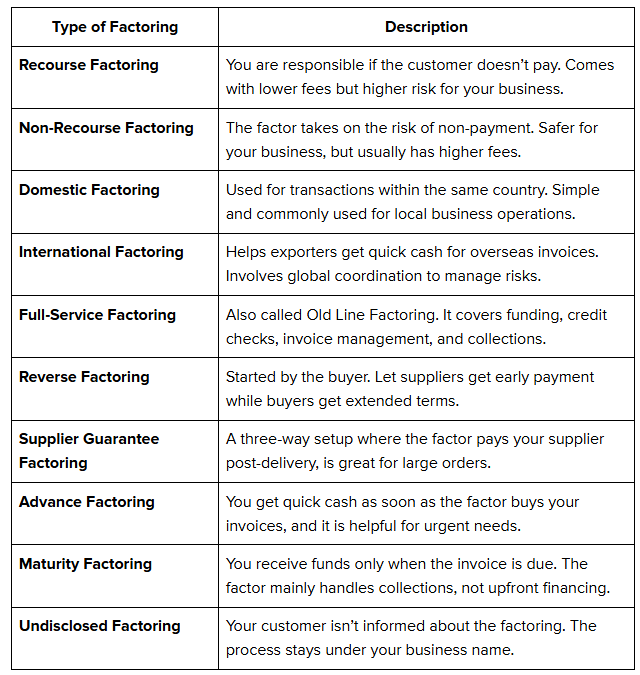
Now that you know the different types of factoring services, you might be wondering which industries use them the most. Let’s take a look.
Industries That Benefit the Most from Factoring
Factoring services are helpful for many industries that deal with delayed payments and need regular cash flow to keep operations running smoothly. Below are the main industries that make the most use of factoring:
Manufacturing
Manufacturing companies often wait a long time to get paid by distributors or retailers.
Factoring helps them turn unpaid invoices into quick cash, so they can buy raw materials and keep production going without delays.
Retail and Wholesale
Retailers and wholesalers deal with large inventories and seasonal changes in demand.
Factoring gives them the working capital they need to manage stock and cover daily expenses more easily.
Import and Export
Businesses involved in global trade benefit a lot from factoring, especially non-recourse options.
It helps them manage payment delays, reduce credit risk, and deal with currency issues when selling overseas.
Logistics and Transportation
Transport and logistics companies have high running costs, including fuel, vehicle maintenance, and salaries.
Factoring gives them a steady cash flow, so they don’t have to wait for clients to pay before covering these expenses.
IT Services
IT companies that offer services on credit terms use factoring to get faster access to money tied up in invoices.
This allows them to focus on growth, upgrade systems, and handle operational costs.
Healthcare
Hospitals, clinics, and other healthcare providers face delays in getting payments from insurance companies or patients.
Factoring helps them keep services running smoothly without cash shortages.
Small and Medium Enterprises (SMEs)
SMEs in different industries benefit from factoring because it gives them fast access to money without needing collateral.
This is especially useful for businesses with limited financial resources.
While factoring can be useful for many businesses, you should also be aware of the possible risks.
Risks in Using Factoring Services
While factoring services can improve cash flow, there are a few important risks you should be aware of:
Risk of Fraud: Fake invoices or hidden agreements between buyers and sellers can lead to financial losses. Without proper verification systems, it’s difficult for factoring companies to detect fraud in time.
Payment Delays and Defaults: If your customer delays or fails to pay, it can affect both your business and the factoring company. This risk increases during economic slowdowns or uncertain market conditions.
High Cost for Small Businesses: Factoring fees and interest rates can be expensive for small companies with tight profit margins. This makes it harder for them to use factoring regularly.
Conclusion
After understanding the different features, working, and types of factoring services, it’s clear that they offer a practical solution for managing receivables and improving cash flow.
But selecting the right factoring arrangement, whether it’s recourse, non-recourse, or industry-specific, depends on your customer payment behavior, risk level, and overall business model. Making an informed choice ensures smoother financial management.
If you're exploring investment opportunities, platforms like Precize can help. Precize is an alternative investment platform that gives you access to unique opportunities like pre-IPO shares and global trade finance opportunities.
Reserve your access today for portfolio diversification!
Disclaimer
This blog is for informational purposes only and should not be considered as financial, legal, or professional advice. Readers are encouraged to consult with a qualified advisor before making any financial or business decisions. Factoring services and other financial arrangements involve risks, and outcomes may vary based on individual circumstances.