HDB Financial Services IPO: Date, Price, and SEBI Approval Details

Discover the latest on HDB Financial Services IPO, including the launch date, price range, and SEBI approval. Stay updated on this upcoming market event.
12 min read
hdb financial services ipo

Have you ever considered the potential of exploring a company before it hits the stock market? The HDB Financial Services IPO is quickly becoming a focal point for many investors. As this IPO approaches, understanding key details like the launch date, price range, and SEBI approval is crucial for anyone interested in exploring this opportunity. With the potential for growth in the financial sector, this IPO offers a unique chance to get in on the ground floor. Let’s explore what you need to know before the launch.

In this blog, we’ll take you through everything you need to know about the upcoming HDB Financial Services IPO, its launch date, price range, and SEBI approval details. 

Key Takeaways

  • The total issue size of ₹12,500 crore includes a fresh issue of ₹2,500 crore and an Offer for Sale (OFS) of ₹10,000 crore from HDFC Bank, giving investors a chance to purchase shares at an attractive price band.

  • The price band is fixed between ₹700 and ₹740 per share, with a minimum lot size of 20 shares, requiring a minimum investment of ₹14,800 for retail investors.

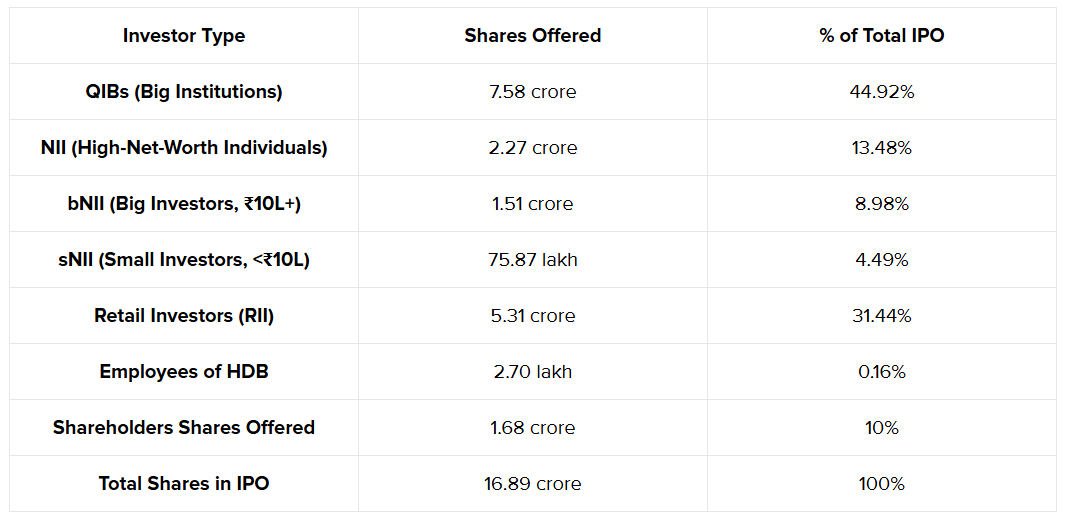
  • The IPO reserves 44.92% of shares for Qualified Institutional Buyers (QIBs), 31.44% for retail investors, and other portions for HNI and employee categories, ensuring broad participation.

  • HDB Financial Services has a high debt-to-equity ratio of 5.85 and a strong track record of profitability, but investors should watch out for risks related to credit quality, market volatility, and regulatory changes affecting the NBFC sector.

What HDB Financial Services Does

HDFC Bank’s subsidiary, HDB Financial Services (HDBFS), is a prominent non‑banking financial company (NBFC) in India. From small businesses to individual households, HDB serves a wide range of customers with financing and related services with a particular focus on reaching underserved and “new‑to‑credit” segments across urban, semi‑urban and rural India.

Core Business Verticals

HDBFS organises its offerings across three main lending verticals:


  • Enterprise Lending: This vertical caters to micro, small and medium enterprises (MSMEs), offering secured and unsecured loans for business capital, expansion, working capital needs, and other enterprise-related financing.

  • Asset Finance: Here, HDBFS provides loans for income‑generating assets. For instance, commercial vehicles, construction machinery, tractors, and other equipment. Such financing typically serves sectors like logistics, transport and small businesses that depend on physical assets.

  • Consumer Finance: Through this vertical, HDBFS offers loans to individuals for durables, two‑wheelers, personal needs, and other consumer‑oriented credit products. These may be secured or unsecured, catering to a wide range of income groups, including those with limited prior credit history.

Beyond lending, HDBFS also delivers Business Process Outsourcing (BPO) services, including collections, back‑office operations, document processing and sales support, largely serving its parent group.

Moreover, HDBFS acts as a distributor for insurance and other fee‑based financial products, offering customers access to general and life insurance (through group partnerships) alongside its credit offerings.

Now that we understand what HDB Financial Services does, let’s explore why the company is launching its IPO and what objectives it aims to achieve through this public offering.

Also Read: Investment strategies of great investors

Why HDB Is Launching an IPO: Context & Objective

When HDB Financial Services (HDBFS) decided to go public with its IPO, several regulatory and business‑strategic reasons came into play. Here’s a list of the key reasons why HDB Financial Services is launching an IPO:

1. Regulatory requirement for large NBFCs

HDBFS is classified as an "upper-layer" non-banking financial company (NBFC-UL) under the regulations of the Reserve Bank of India (RBI). As per recent regulatory norms, large NBFCs, particularly those of HDBFS’s size and scale, are required to migrate toward a public listing. By launching an IPO, HDBFS aims to comply with these regulatory norms and position itself among publicly listed lenders, a step that reflects its readiness to meet regulatory, capital adequacy, and disclosure standards.

2. Strengthen capital base for future growth and lending capacity

One of the key uses of the IPO proceeds is to boost HDBFS’s Tier-I capital base. According to its IPO document, the "fresh issue" portion will help strengthen capital reserves to support future lending in enterprise lending, asset finance, and consumer finance. This capital infusion will give HDBFS room to expand its loan book and serve more customers, particularly in underbanked or credit-underserved regions, while maintaining healthy capital adequacy.

3. Provide a path for existing shareholders to exit or monetise (Offer-for-Sale)

The IPO comprises two parts: a fresh issue by HDBFS itself and an Offer-for-Sale (OFS) of equity held by its parent company, HDFC Bank. Through the OFS, existing shareholders, primarily the parent bank, can partially offload their stake. This can help restructure shareholding, optimise capital allocation at the group level, and offer liquidity to existing promoters while establishing HDBFS as a more independent, publicly listed entity.

4. Positioning for scale and visibility with large-size IPO

With a total issue size of ₹12,500 crore, HDBFS’s IPO ranks among the largest NBFC IPOs. Such a large-scale public offering signals HDBFS’s confidence in its business model, financial strength, and growth trajectory. Going public raises the company’s visibility and subjects it to the governance standards of the stock market, building trust with customers, partners, and regulators.

With the reasons for launching the IPO now clear, let’s move on to the key dates you need to track for a successful application.

IPO Timeline: Key Dates to Remember

The HDB Financial Services IPO was a key event for investors, with the following important dates marking the process:

  • IPO Subscription Open: The subscription opened on 25 June 2025, allowing investors to place bids within the price band of ₹700 to ₹740 per share.

  • IPO Subscription Close: The subscription closed on 27 June 2025, marking the end of the application period.

  • Tentative Allotment Date: On 30 June 2025, investors could check if they had been allotted shares and the quantity they received.

  • Refunds and Share Credit: On 1 July 2025, refunds were processed for unsuccessful applicants, and shares were credited to the demat accounts of successful ones.

  • Listing Date on NSE and BSE: The shares were listed on 2 July 2025, beginning their public trading on both NSE and BSE.

(Sources: BSE, SEBI & Other Financial Articles)

Having outlined the important IPO dates, let’s explore the structure and key aspects of the offering in more detail.

Also Read: Financial Planning- Meaning, Benefits, Steps & Common Mistakes

IPO Structure & Key Issue Details

Understanding the structure of the IPO is crucial for potential investors. This section covers the main details of the offering, including the price band, lot size, and the allocation of shares.

Price Band, Share Details & Application Lot Size

  • Price Band: ₹700 to ₹740 per equity share

  • Face Value: ₹10 per share

  • Minimum Lot Size: 20 shares

  • Minimum Investment: ₹14,800 (at the upper price band)

Issue Size and Composition: Fresh Issue + Offer for Sale (OFS)

  • Total Issue Size: ₹12,500 crore

    • Fresh Issue: ₹2,500 crore

    • Offer for Sale (OFS): ₹10,000 crore (existing shares sold by HDFC Bank)

Reservation / Investor Category Allocation

  • The IPO is reserved across various categories:

    • Retail Individual Investors

    • Qualified Institutional Buyers (QIBs)

    • Non-Institutional Investors (HNI)

Other Listing Information

  • The IPO follows the book-building process, a standard method for large offerings.

  • Shares will be listed on both the National Stock Exchange (NSE) and Bombay Stock Exchange (BSE).

After understanding the structure and key details of the HDB Financial Services IPO, it’s important to note that the offering has also received official approval from SEBI, ensuring its compliance with regulatory standards.

SEBI’s Approval of HDB Financial Services IPO
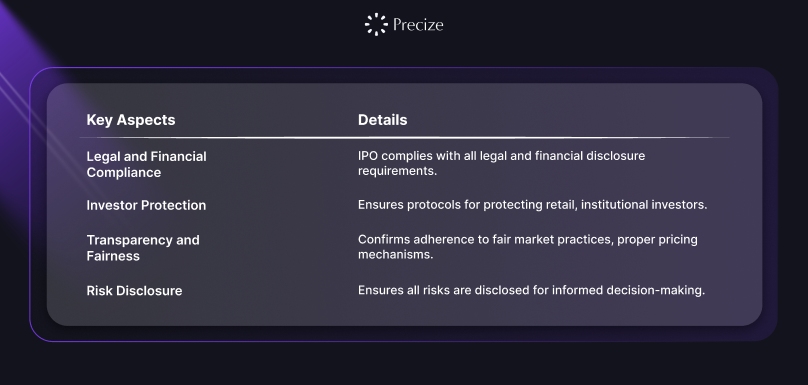
SEBI, the regulatory authority for securities markets in India, ensures that all IPOs meet the necessary regulatory standards for transparency, fairness, and investor protection.

The IPO received approval from SEBI after a careful examination of its Draft Red Herring Prospectus (DRHP), which included detailed financials, risk factors, and business strategies. SEBI’s approval signifies that:

  1. Legal and Financial Compliance: The IPO complies with all legal and financial disclosure requirements, ensuring that investors have access to accurate, complete, and up-to-date information regarding the offering.

  2. Investor Protection: SEBI’s review process ensures that the offering follows the necessary protocols to protect the interests of retail investors, institutional investors, and other stakeholders.

  3. Transparency and Fairness: The approval confirms that the IPO adheres to fair market practices, including proper pricing mechanisms and the allocation of shares among various investor categories.

  4. Risk Disclosure: SEBI also ensures that all risks associated with the IPO have been adequately disclosed, enabling investors to make informed decisions.

By approving this IPO, SEBI has provided its stamp of trust, which assures investors that the offering is legitimate, regulated, and compliant with the highest standards of financial markets.

With SEBI’s approval in place, the next step for potential investors is to understand how to apply for the HDB Financial Services IPO and the available lot sizes for different investor categories.

Suggested Read: IPO Investment Strategies- Maximizing Returns with Informed Decisions

HDB IPO Lots and Application Process

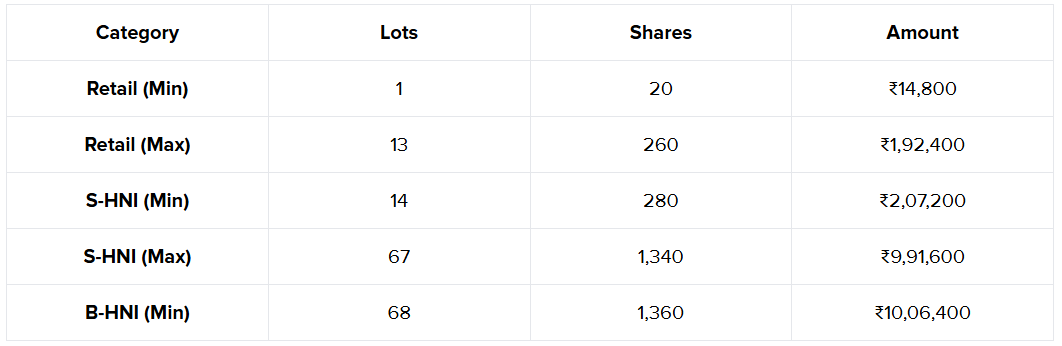
In an IPO, shares are allocated in lots, with each lot representing a specific number of shares. For the HDB Financial Services IPO, the lot size is 20 shares, and the minimum investment is ₹14,800. Understanding the lot sizes and application process helps investors plan their bids and ensure they meet the criteria for different investor categories.

Application Lot Sizes

This section details the number of shares in each lot and the corresponding investment amount, helping investors understand the minimum and maximum subscription options based on their investor category.
Reservation and Allocation Breakdown

This section explains how shares are reserved for different investor categories and how they are allocated, offering transparency on share distribution among qualified institutional buyers, high-net-worth individuals, and retail investors.
Having covered the application process and IPO structure, let’s now take a look at the valuation metrics of HDB Financial Services, which will help investors assess the company's financial health and determine its potential for growth post-IPO.

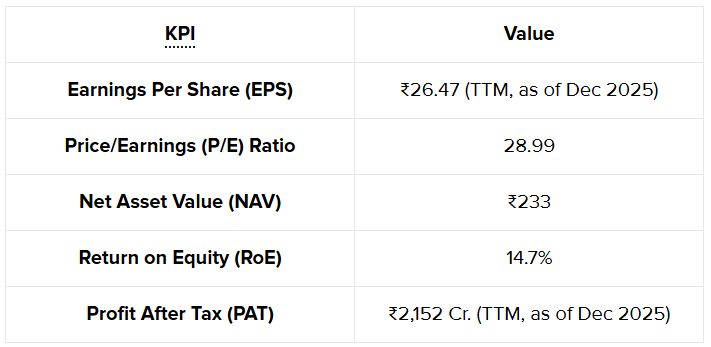
HDB Financial Services IPO Valuation Overview

This section provides a detailed look at the financial health and valuation metrics of HDB Financial Services, helping investors assess the company’s financial performance and the potential attractiveness of its IPO. 
Now that we have a grasp on HDB Financial Services' valuation, let's explore its financial performance to understand its earnings and financial health.

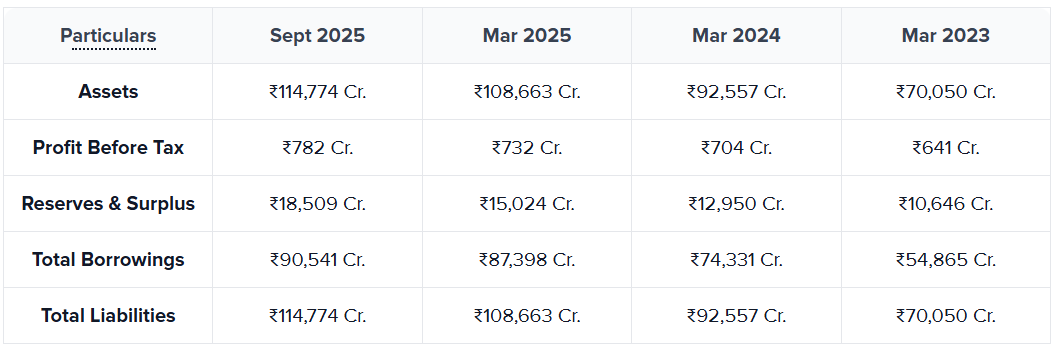
HDB Financial Services Financials

HDB Financial Services has shown steady growth in its key financial metrics over the past few years. With a strong asset base and consistent revenue increases, the company has demonstrated its ability to generate substantial profits. Here’s a snapshot of HDB Financial Services' financials for the past few years:

With a clear understanding of HDB Financial Services' financial health, let's now explore how you can participate in this exciting IPO.

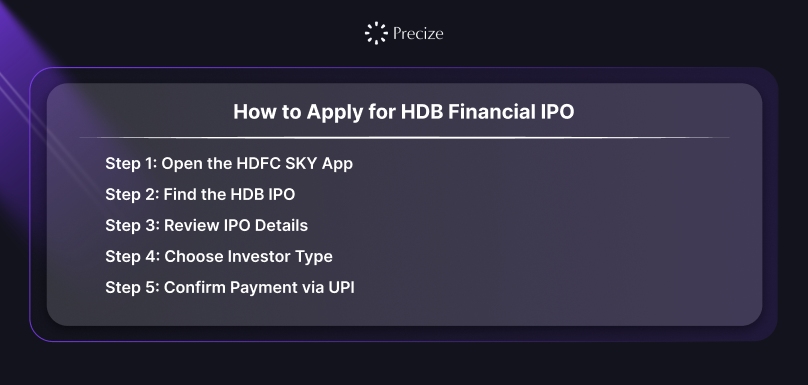
How to Apply for HDB Financial IPO

The HDB Financial Services IPO offers a straightforward application process through various platforms, including the HDFC SKY app. Here’s a step-by-step guide:

Step 1: Open the HDFC SKY App

Launch the app on your smartphone and go to the IPO section.

Step 2: Find the HDB IPO

Select the HDB Financial Services IPO from the available list.

Step 3: Review IPO Details

Ensure you understand the lot size, price band, and issue dates.

Step 4: Choose Investor Type

Select your investor category and the number of lots you wish to apply for.

Step 5: Confirm Payment via UPI

Approve the payment request through your UPI app (Google Pay, PhonePe, etc.).

Once your payment is confirmed, your application will be processed, and the results will be available on the allotment date. 

Before you apply for the HDB Financial Services IPO, it’s important to understand the potential risks and factors to watch closely once the stock is listed. 

What Are the Risks & What to Watch Closely Post‑IPO

Exploring HDB Financial Services post-IPO comes with certain risks. Here’s what to keep an eye on:

1. Credit Risk & Economic Factors

HDBFS faces credit risk from its lending portfolio. Any rise in loan defaults or unfavourable economic conditions, such as interest rate changes, could affect profitability.

2. Regulatory Risks

Changes in regulations from the RBI or SEBI could impact HDBFS’s operations, particularly in terms of capital adequacy and compliance.

3. Market Volatility

The stock may experience volatility post-listing, especially in the first few days or months. Price fluctuations are common for newly listed stocks as the market finds equilibrium.

4. Promoter Stake Sale Overhang

The Offer for Sale (OFS) allows HDFC Bank to reduce its stake in HDBFS. This could create downward pressure on the stock in the short term if there is significant selling activity.

5. Loan Book Quality

The quality of HDBFS’s loan book, including its NPAs and borrower diversification, will be a key risk factor. An increase in bad loans could affect profitability and growth.

6. High Debt Levels

With a debt-to-equity ratio of 5.85, HDBFS has a high level of debt. Investors should monitor the company's ability to manage its debt and maintain profitability as borrowing costs fluctuate.

Conclusion

HDB Financial Services’ IPO offers a unique opportunity for investors to participate in one of India's largest non-banking financial companies. With a solid track record and a diversified portfolio across lending verticals, HDBFS is well-positioned for growth. However, as with any investment, understanding the associated risks and staying informed about market dynamics is crucial for making confident decisions.

If you're looking to explore opportunities beyond traditional IPOs, Precize provides a platform to discover more. With access to leading private companies through unlisted and  pre-IPO shares, as well as global trade finance options, Precize helps diversify your portfolio with alternative investment routes.

Reserve your access with Precize and discover investment opportunities beyond traditional markets!

Disclaimer: This article is intended for informational purposes only and does not constitute financial, legal, or investment advice.

FAQs

1. What is the HDB Financial Services IPO, and how can I participate?

The HDB Financial Services IPO is a public offering of shares by HDBFS, which is opening on 25 June 2025 and closing on 27 June 2025. To participate, you can apply through UPI or ASBA through your broker or bank account. The price band is set between ₹700 to ₹740 per share, and the minimum lot size is 20 shares.

2. What is the price band for the HDB Financial Services IPO?

The price band for the IPO has been fixed between ₹700 to ₹740 per equity share. This is the price range at which investors can bid for the shares during the IPO subscription period, which runs from 25 June 2025 to 27 June 2025.

3. How is the share allocation done in the HDB Financial Services IPO?

The shares are allocated based on categories such as Qualified Institutional Buyers (QIBs), Non-Institutional Investors (NII), and Retail Investors (RII). Retail investors can apply for a minimum of 1 lot (20 shares) and up to 13 lots (260 shares). The allocation percentage is reserved for each category, with 44.92% reserved for QIBs and 31.44% for retail investors.

4. When will the HDB Financial Services IPO be listed on the stock exchange?

The HDB Financial Services IPO is expected to list on the NSE and BSE on 2 July 2025. Once listed, the shares will be available for trading on both major exchanges.

5. What are the risks of exploring the HDB Financial Services IPO?

Like any investment, the HDB Financial Services IPO carries certain risks, including market volatility, credit risk from its loan book, and potential regulatory changes that could affect its operations. It’s important for investors to carefully consider these risks before applying for the IPO.

Precize
Precize
Content Strategy and Research Analyst

Stay in the Loop

Join our newsletter for exclusive access to thoughtfully curated content and we promise, no spam

The next generation of asset classes in India

Resources

Our Office

Office No. 1219, The Summit Business Park, Andheri Kurla Road, Andheri East, Mumbai, Maharashtra - 400093

Find us on Google

support@precize.in

+91 7738336457

All trademarks and logos or registered trademarks and logos found on this Site or mentioned herein belong to their respective owners and are solely used for informational and educational purposes.

The material presented in this advertisement is for informational purposes only and should not be construed as investment advice or investment availability. It is not a recommendation of, or an offer to sell or solicitation of an offer to buy, any particular unlisted share, security, strategy, or investment product. Investing in the private market and securities involves risks, including the potential loss of money, and past performance does not guarantee future results. Market trends, data interpretations, graph projections are provided for informational and illustrative purposes and may not reflect actual future performance. Nothing on this website should be construed as personalized investment advice or should not be treated as legal, financial, or any other form of advice. Precize is not liable for financial or any other form of loss incurred by the user or any affiliated party based on information provided herein.

Precize is neither a stock exchange nor does it intend to get recognized as a stock exchange under the Securities Contracts Regulation Act, 1956. Precize is not authorized by the capital markets regulator to solicit investments. The securities traded on these platforms are not traded on any regulated exchange.

The website will be updated regularly.

Copyright © 2026 - Precize - All Rights Reserved

HDB Financial Services IPO: Date, Price, and SEBI Approval Details