ICICI Prudential AMC IPO: Key Dates & Timeline
ICICI Prudential AMC has already completed the key regulatory formalities for its public issue, setting the stage for the next set of announcements. With the DRHP now filed and reviewed publicly, the IPO is moving steadily toward its subscription window.
To help you track what’s confirmed and what’s expected next, here’s a clear breakdown of the major dates that shape the IPO journey.
Confirmed Milestones
These events have already been recorded through official filings and disclosures:
DRHP Filed: 8 July 2025
Public Disclosure by SEBI: 17 July 2025, showing the IPO under “Draft Offer Documents Filed”.
Listing Proposal: Shares proposed to list on NSE & BSE as per exchange filings
What’s Awaited (To Be Announced)
The company will release these details after final discussions with book-running lead managers:
IPO Open & Close Dates – to be announced once the price band is frozen
Anchor Book Opening Date – typically one working day before the issue opens
Final RHP Release – expected before the subscription window goes live
Expected Post-Issue Timeline (Standard SEBI Process)
Once the issue closes, the remaining steps follow SEBI’s T-day schedule:
T+1: Basis of allotment finalised
T+2: Refunds/UPI unblocks for non-allottees
T+2/T+3: Shares credited to Demat accounts
T+3: Expected listing on NSE & BSE
Suggested Read: Demystifying Private Assets: A Beginner’s Guide to How to Access Private Assets
With the key dates outlined, the next question most readers have is about the pricing and structure of the offer.
ICICI Prudential AMC IPO Price Band, Lot Size & Issue Structure
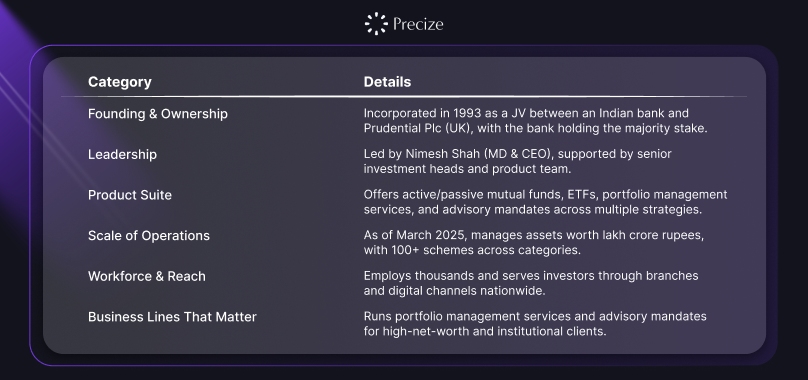
ICICI Prudential AMC’s IPO is structured as a pure Offer for Sale (OFS), meaning the company itself is not issuing new shares. Instead, an existing promoter shareholder is selling a portion of their stake. This makes the IPO primarily a liquidity event, and all key numbers come directly from the company’s official filings.
To understand what this means in practice, here’s how the offer is structured in the DRHP.
The IPO is a 100% OFS, with no fresh issue component.
The seller has proposed to offload up to 17,652,090 equity shares (pre-bonus).
The board has approved a bonus issue of 1.8 bonus shares for every 1 share held, which will expand the total number of OFS shares if executed before the IPO.
Shares are proposed to list on NSE and BSE.
Price Band & Lot Size (To Be Announced)
The company has not yet released the price band or lot size. However, what we do know is:
The issue will follow the book-building process, so the price band will be declared closer to the subscription dates.
Lot size will be finalised only after the price band is announced, as both are linked.
This keeps the offer aligned with SEBI norms and allows pricing to reflect market conditions at the time.
Category-Wise Allocation (As Per Book-Built Norms)
While the RHP will confirm exact percentages, book-built IPOs typically follow SEBI’s allocation structure:
QIBs: Majority portion
NIIs: Mid-tier investor segment
Retail investors: Up to 10%
Employee quota: If announced, details will appear in the RHP
Keep an eye on the company’s RHP for final allocation numbers.
With the structure outlined, let’s move to the company’s financial snapshot.
ICICI Prudential AMC Company & Financials Snapshot
Understanding the company’s financial strength is essential before exploring any details about the IPO. To give you a clear picture, here’s a simple breakdown of how the business performs, how it earns, and what its numbers really look like.
AUM Scale & Revenue Strength
ICICI Prudential AMC manages an enormous pool of money. As of March 31, 2025, its average assets under management stood at ₹9,148.78 billion, reflecting the sheer trust the company commands among investors. Its revenue from operations for FY25 crossed ₹46,827.8 million, demonstrating the significant size of its fee-earning engine.
A major portion of this revenue, ₹39,635.1 million, came from managing the ICICI Prudential Mutual Fund alone, which continues to be the AMC’s largest client by contribution.
How the Business Operates Day-to-Day
ICICI Prudential AMC runs a broad investment platform, offering more than 100 mutual fund schemes spanning equity, debt, hybrid, and ETFs. It also manages 23,525 PMS and advisory clients, giving it a sizeable presence beyond standard mutual fund products.
On the ground, the organisation is supported by 3,722 employees and a nationwide network of 264 offices, backed by digital channels for investor servicing and distribution.
Financial Trends That Matter
A closer look at recent filings and public disclosures highlights a few important signals:
The AMC’s AUM has continued to expand rapidly, with industry reports indicating a further jump after March 2025.
Revenue remains anchored by the ICICI Prudential Mutual Fund account, making client concentration a notable factor.
Growth remains supported by SIP inflows, new scheme launches, and stronger traction in PMS/advisory offerings.
These trends show a company that is large in scale, operationally deep, and closely tied to India’s rising long-term savings activity.
Now that the business fundamentals are in view, the natural next question is: who’s selling their stake, and how much? Let’s take a closer look.
Shareholding Pattern & Offer-for-Sale (OFS) Structure
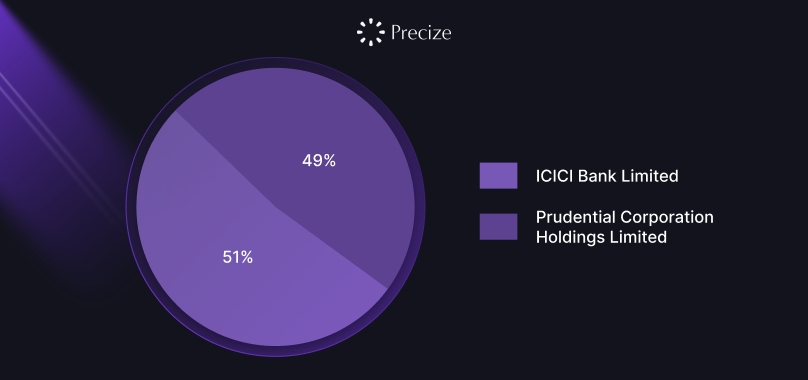
Imagine the AMC as a two-owner venture: one Indian finance giant, the other an international insurer.
The Indian side: ICICI Bank Limited that holds 51% of the equity.
The other, Prudential Corporation Holdings Limited (UK), holds 49%
This split is more than accounting: it reflects governance stability, alignment of promoter interests, and gives a clear majority partner (ICICI Bank) steady control.
However, the UK partner (Prudential) is the one selling via the IPO. That means the listing isn’t about the company raising fresh money; it’s about the foreign partner realising value from its stake.
In essence, the ownership structure remains fundamentally unchanged post-offer (at least for the Indian promoter), but one shareholder is reducing exposure.
The OFS Mechanics & Why It Matters
Here are the key structural features, and why they are meaningful:
The IPO is structured as a 100% Offer for Sale (OFS), meaning the company itself isn’t issuing new shares; all offered shares come from the selling promoter (Prudential)
The number of shares on offer is given as up to 17,652,090 equity shares (pre-bonus).
There is an approved bonus issue of 1.8 shares for every one held, meaning the total shares increase from 176.5 million to 494.26 million, subject to approval. Post‐bonus, the ‘offering’ size would correspondingly increase to up to 49,425,852 shares.
The proceeds from the sale will go to the selling shareholder; the AMC itself will not receive these funds. That means its balance sheet and capital base remain unchanged.
There’s an interesting reservation layer: Up to 10% of the offer is reserved for “Eligible ICICI Bank Shareholders”; i.e., existing shareholders of ICICI Bank get an exclusive access slice.
Also Read: IPO vs FPO vs OFS-Key Differences Every Investor Must Know
With the ownership picture and offer structure in place, the final piece is knowing how investors can take part in the issue.
How to Apply: Step-by-Step Guide
Applying for an IPO today is a fully digital process, and most investors can complete it in just a few minutes. Whether you’re a first-time applicant or someone who participates regularly, the steps remain quick, standardised, and user-friendly.
Here’s a straightforward walkthrough of how the application process works:
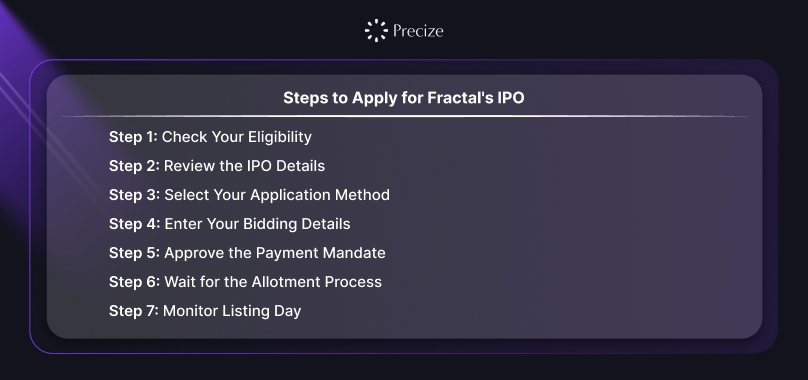
1. Check Your Eligibility
Before applying, ensure you have:
A Demat account (mandatory for receiving shares)
A linked bank account enabled for UPI or ASBA
Updated KYC with your broker or bank
If these are in place, you’re ready to apply.
2. Review the IPO Details
Go through the key information released in the RHP, including:
Price band
Issue dates
Lot size
Category-wise allocation (retail, NII, QIB, shareholder quota, etc.)
This helps you decide how much you want to apply for.
3. Select Your Application Method
You can apply using either:
Both methods block the required amount in your bank account until allotment.
4. Enter Your Bidding Details
Choose:
Selecting the cut-off ensures your application remains valid within the final price decided.
5. Approve the Payment Mandate
Once you submit your bid:
Approving this mandate is essential; without it, the application is not considered.
6. Wait for the Allotment Process
After the issue closes:
The registrar finalises allotments
Non-allottees get their funds unblocked
Successful applicants receive shares directly into their Demat account
All updates can be tracked through the registrar’s website or your broker.
7. Monitor Listing Day
On listing day, the shares begin trading on the designated stock exchanges.
Investors can choose to hold, add more, or book listing gains, based on market sentiment and long-term goals.