ITR Filing Dates
Knowing the key dates for ITR filing is essential to staying compliant and avoiding penalties. This includes both the start date and the due date for FY 2024-25 (AY 2025-26).
ITR Filing Dates Start Date for FY 2024-25 (AY 2025-26)
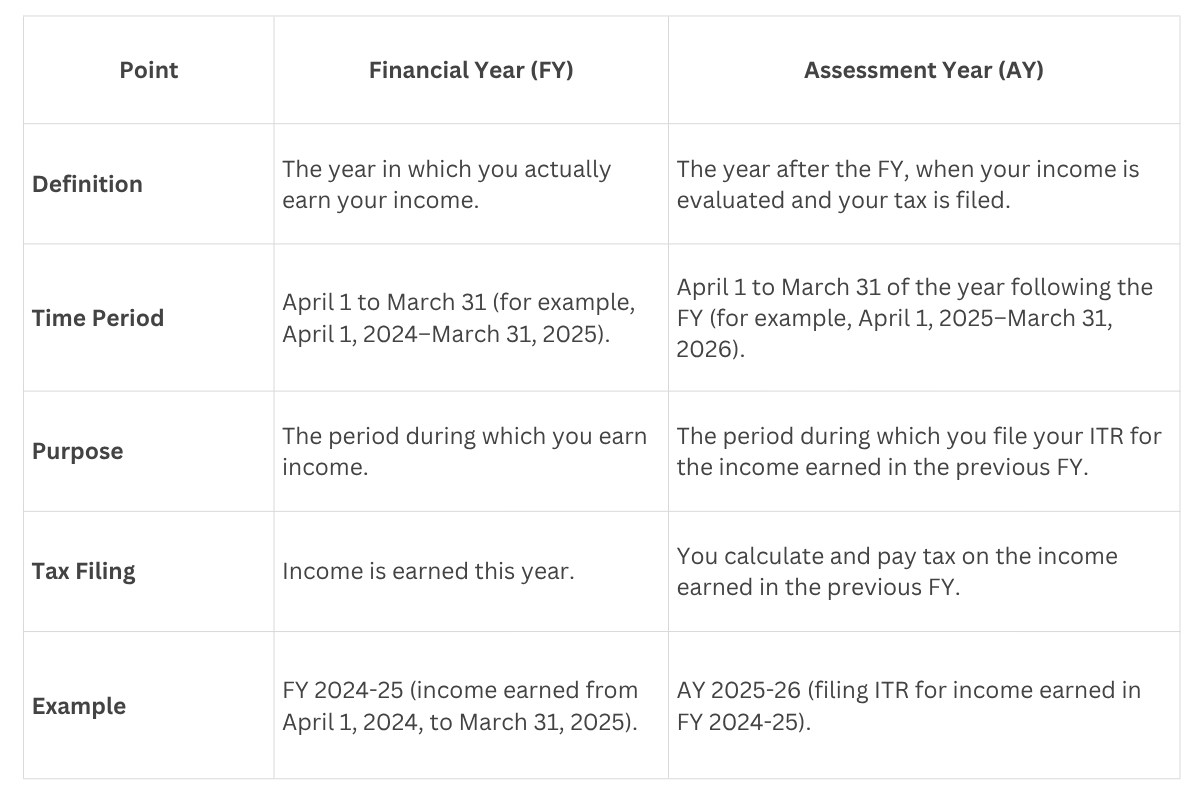
The ITR filing for the Financial Year 2024-25, corresponding to Assessment Year 2025-26, usually starts on April 1 of the assessment year, but this year, there was a delay due to updates in the ITR forms and necessary improvements on the Income Tax Department’s e-filing portal.
ITR Filing Due Date for FY 2024-25 (AY 2025-26)
For most individual taxpayers and cases not requiring audit, the last date to file your ITR without any penalty is September 15, 2025, which was extended from the original deadline of July 31, 2025. If you miss this date, you can still file a belated return until December 31, 2025, but it will include penalties and interest charges:
A late fee of up to Rs. 5,000 (or Rs. 1,000 if your income is below Rs. 5 lakh).
Under Section 234A, interest at the rate of 1% per month is applied to any unpaid tax, calculated from the original due date until the date the return is actually filed.
With the filing dates in mind, it’s important to follow a clear process to complete your ITR accurately.
Simple 15 Steps to File ITR Online
Filing your Income Tax Return online is straightforward if you follow the right steps. Here are 15 steps to help you through the process:
Step 1: Gather Your Documents
Before you begin, make sure you have all the necessary documents ready. This includes Form 16 from your employer, bank statements, interest certificates, documents related to capital gains, and proof of any investments or deductions you plan to claim. Having everything ready makes the process faster and accurate.
Step 2: Access the Official Income Tax E-filing Website
Visit the Income Tax Department’s official e-filing website using a safe and secure browser. Double-check the URL to avoid scams and ensure you are on the official portal.
Step 3: Register or Log in
If you are using the portal for the first time, register using your PAN as the User ID and complete the registration with your email and mobile number. If already registered, simply log in with your PAN and password.
Step 4: Select the Assessment Year and Filing Mode
After logging in, select Assessment Year 2025-26, which corresponds to Financial Year 2024-25. Choose to file your return online, as this is the easiest and fastest method.
Step 5: Start a New Filing or Resume Draft
You can either start a new return if you haven’t saved any drafts or continue with a saved draft for this year if you paused earlier.
Step 6: Choose Your Status
Select your filing status, such as Individual, Hindu Undivided Family (HUF), or other categories. Most salaried taxpayers will select “Individual.” Confirm whether you are filing for yourself or on behalf of someone else.
Step 7: Select the Appropriate ITR Form
Choose the correct ITR form based on your income sources. For salaried individuals with income from salary and other sources but no business income, ITR-1 or ITR-2 is usually suitable.
Step 8: Select the Reason for Filing
Specify why you are filing the return. In most cases, this is because your income exceeds the basic exemption limit or you want to claim a refund.
Step 9: Choose the Tax Regime
The New Tax Regime is the default for AY 2025-26, offering lower tax rates but fewer deductions. If you want to claim deductions like 80C or HRA, select the Old Tax Regime instead.
Step 10: Fill in Personal and Income Details
Verify pre-filled personal details like your name, PAN, and date of birth. Enter your income details, including salary, interest, and other sources. Check that the pre-filled TDS information matches your Form 16 and bank documents.
Step 11: Enter Deductions (if applicable)
If you are filing under the Old Tax Regime, enter deductions under Chapter VI-A, such as PF, LIC, or tuition fees. Most deductions are not available under the New Tax Regime.
Step 12: Preview Your Return
Before submitting, review all details carefully. Make sure your income, deductions, and tax computations are correct. Correct any errors or missing information.
Step 13: Submit the ITR
Once everything is verified, submit your return on the portal. You will receive an acknowledgment number confirming your submission.
Step 14: E-Verify the Return
Complete the filing process by e-verifying your return. You can do this via Aadhaar OTP, net banking, bank ATM, or by sending a signed physical copy of the ITR-V to the CPC Bangalore. E-verification is instant and recommended.
Step 15: Save Acknowledgment
Retain the acknowledgment for your reference after filing your ITR. This serves as proof that your ITR has been successfully filed.
With your ITR successfully filed, let’s look at the key reasons why timely filing is beneficial.
Benefits of Filing ITR on Time
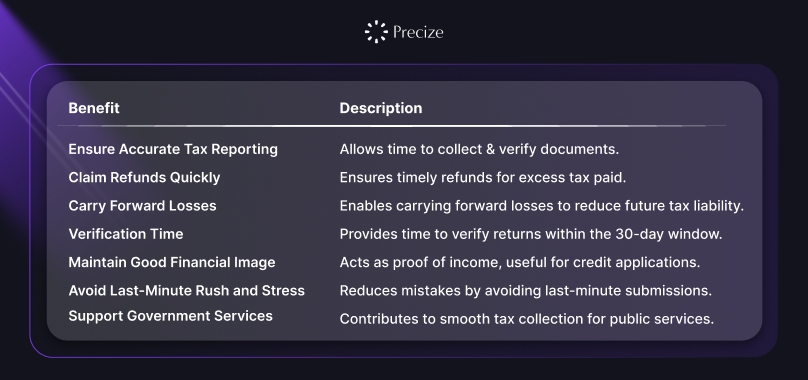
Filing your ITR on time comes with several advantages that go beyond just meeting the deadline.
Ensure Accurate Tax Reporting
Filing your ITR early gives you enough time to collect all documents and verify details, helping reduce errors or omissions in your return.
Claim Refunds Quickly
If you have paid excess tax, filing on time ensures you receive your refund promptly from the Income Tax Department.
Carry Forward Losses
Filing before the deadline allows you to carry forward any losses from the current year, which can be adjusted against future profits and reduce your tax liability later.
Verification Time
After filing, you must verify your return within 30 days. Early filing gives you sufficient time to complete verification without stress.
Maintain Good Financial Image
Timely ITR filing acts as proof of income and financial discipline, which can be important when applying for credit cards, loans or other financial services.
Avoid Last-Minute Rush and Stress
Filing on time helps you avoid the last-minute rush and reduces the chances of mistakes caused by hurried submissions.
Support Government Services
By filing your taxes on time, you contribute to smooth tax collection, which supports public services and government welfare programs.
Filing your ITR on time has many benefits, but being aware of common errors is also important to ensure a smooth process.
Common Mistakes to Avoid in ITR Filing
Filing your ITR accurately is important to avoid delays, penalties, or notices from the Income Tax Department. Here are some common mistakes to watch out for:
Choosing the Wrong ITR Form
Choose the appropriate ITR form according to your income sources and your taxpayer category.
For instance, salaried individuals without business income usually use ITR-1, while those with capital gains or business income may need ITR-2 or ITR-3.
Using the wrong form can lead to rejection or delays.
Missing the Filing Deadline
The last date for most individual taxpayers is September 15, 2025.
Not Verifying Pre-Filled Details
The Income Tax portal pre-fills data like PAN, Aadhaar, bank details, and TDS from Form 26AS.
Not Reporting All Income Sources
Ensure that you include income from every source, such as salary, capital gains, freelance work, rent, and other earnings. Failing to do so can result in penalties or scrutiny.
Delaying Tax Payment
If you owe any tax, pay it before submitting your ITR. Delaying or paying partially can attract interest under Section 234A and increase your overall tax liability.
Not Filing Revised Returns for Errors
If you notice mistakes after submission, file a revised return before the deadline. This helps correct errors and avoids penalties or loss of refunds.
Ignoring New Rules and Updates
Stay informed about any changes in ITR forms or tax laws for AY 2025-26. Checking official notifications ensures your filing is accurate and compliant.
Skipping Reconciliation with Form 26AS and AIS
Always reconcile the tax credits shown in Form 26AS and the Annual Information Statement (AIS) with your return. This prevents mismatches and delays in processing your return.
Conclusion
Based on everything discussed in this blog, being aware of the ITR filing start date for AY 2024-25 and following the proper steps ensures that filing your ITR for FY 2024-25 is smooth and hassle-free.
Meeting deadlines, preparing documents in advance, choosing the correct ITR form, and avoiding common mistakes help keep your financial records accurate.
In addition, platforms like Precize offer access to alternative investment opportunities in private equity and private credit, making it easier to diversify your portfolio.
Reserve your access today and explore new investment opportunities!
FAQ
Are there different deadlines for other taxpayers?
Yes, taxpayers who need audits, such as companies, must file by October 31, 2025. Those involved in international transactions have a deadline of November 30, 2025.
Can I revise my filed ITR later?
Yes, you can submit a revised return to correct any mistakes until December 31, 2025.
What documents should I prepare before filing?
Make sure to have your salary slips, bank statements, Form 26AS for TDS details, capital gains statements, and other proof of income ready before filing.
Why was the deadline extended?
The extension was provided to allow time for TDS corrections, updates to new ITR forms, and to help taxpayers avoid errors due to last-minute filing.
Disclaimer
The information provided in this blog is for general informational purposes only and is based on publicly available sources. While we strive to ensure accuracy, readers should verify all details, including the ITR filing start date for AY 2024-25, with official notifications from the Income Tax Department. For personalized guidance related to tax filing or investment decisions, consult a certified tax professional or financial advisor.