
When you're looking to explore or simply trying to understand how public companies work, one of the first things you should know is the difference between listed and unlisted public companies.
Both types of companies are part of the broader stock market but operate in very different ways. These differences can affect how you invest, the risks involved, and how easily you buy or sell shares.
In this blog, we’ll take a close look at these differences. We’ll explain what listed and unlisted public companies are. We’ll also cover investment options for both. Whether you're new to investing or already have some experience, understanding these differences will help you make better decisions, especially in the Indian market.
Let's get started!
What is a Listed Public Company?
A listed public company is a company whose shares are traded on a stock exchange, like the Bombay Stock Exchange (BSE) or National Stock Exchange (NSE) in India. These companies have gone through an Initial Public Offering (IPO) and are now accessible to the public for buying and selling shares.
This listing on a stock exchange makes the company's shares available to a wide range of investors, both retail and institutional.
While listed companies are accessible to the public through stock exchanges, unlisted companies follow a different path. Let’s understand how!
What is an Unlisted Public Company?
An unlisted public company is a type of public company whose shares are not traded on any stock exchange. While it can still raise funds by selling shares directly to the public, it doesn't have to follow the same strict regulatory rules as a listed company.
The company can avoid the complexity and costs of stock exchange regulations without being listed.
With an understanding of unlisted & listed companies, let’s look at how they differ.
Key Differences Between Unlisted and Listed Public Companies
Knowing how listed and unlisted public companies differ when investing is important. While both are public companies, they operate in very different ways. Here are the key differences in ownership, regulation, liquidity, and more to help you understand how each works.
Ownership
When it comes to ownership, listed and unlisted public companies operate differently.
Unlisted Companies: Shares of unlisted companies are not available on public exchanges. Instead, they are typically owned by a smaller group of private investors or a few institutions.
Listed Companies: The shares of listed companies are traded on stock exchanges, which means anyone can buy or sell them. This results in a large number of shareholders, including both retail and institutional investors.
Regulation
The level of regulatory oversight is another key difference.
Unlisted Companies: Unlisted companies face fewer regulatory requirements, meaning they don't have to follow the same level of reporting or governance rules as listed companies. This can reduce their operational costs but also means less transparency for investors.
Listed Companies: These companies are regulated by the Securities and Exchange Board of India (SEBI). They must comply with strict financial reporting standards and corporate governance rules.
Liquidity
Liquidity varies greatly between listed and unlisted companies, or how easily you can buy and sell shares.
Unlisted Companies: These companies have lower liquidity because their shares are not traded on public exchanges. As a result, buying or selling shares typically requires private negotiations, making it harder to convert shares into cash quickly. However, platforms like Precize simplify this by offering a dedicated team of selling specialists who help you locate potential buyers for your unlisted shares and ensure the transaction proceeds smoothly. They also support the liquidation process, providing a hassle-free experience for investors.
Listed Companies: Since their shares are traded on public stock exchanges, you can easily buy and sell shares, giving listed companies high liquidity.
Financial Reporting
How companies report their financial performance also differs.
Unlisted Companies: Unlisted companies are not obligated to provide regular disclosures, giving them more privacy in their operations. However, this also means you may not have access to as much detailed financial information. Unlisted companies are not obligated to provide regular disclosures, giving them greater operational privacy. However, they do release financial information, and through Precize, you can access annual reports and research reports on unlisted companies to make well-informed investment decisions.
Listed Companies: These companies must publish regular financial statements and disclosures, ensuring investors can access up-to-date information about their performance.
Market Valuation
Listed and unlisted companies follow different processes when determining their market value.
Unlisted Companies: For unlisted companies, the valuation is typically based on internal assessments, private negotiations, or independent valuations, which can be less transparent and harder to determine.
Listed Companies: The market value of a listed company is determined by supply and demand on the stock exchange, making it easy to assess based on current stock prices.
Volatility
Volatility, or how much a company’s stock price fluctuates, is important to look at when comparing Unlsited & listed public companies:
Unlisted Companies: Since unlisted companies are not traded on the stock market, their share prices are generally more stable and not subject to daily market fluctuations.
Listed Companies: The share prices of listed companies can be highly volatile because market conditions, investor sentiment, and news events influence them.
Access to Capital
When it comes to raising capital, listed companies generally have an easier time.
Unlisted Companies: They rely more on private funding sources, like bank loans or private equity, which may limit their ability to raise large amounts of capital compared to listed companies.
Listed Companies: These companies can raise funds more easily by issuing new shares in the stock market, which allows them to tap into a larger pool of investors.
Transparency
Transparency is another area where listed and unlisted companies differ.
Unlisted Companies: These companies enjoy more privacy, meaning their operations and financials are not subject to the same level of scrutiny. While this can be an advantage for the company, it may raise concerns about the level of information available to potential investors.
Listed Companies: Due to SEBI regulations, listed companies must disclose detailed financial and operational information, which provides transparency and helps build investor confidence.
Return Potential
The return potential for investors can also differ significantly between listed and unlisted companies.
Unlisted Companies: Unlisted companies often have higher return potential, especially because they are frequently in their growth stages. These companies are typically expanding and may have substantial upside potential. However, if the company grows successfully or gets listed, the returns can be significant as early investors could benefit from an increase in valuation.
Listed Companies: These companies tend to have more stable returns due to their transparency, regulatory oversight, and access to public markets. However, they may also be subject to short-term market volatility, which can impact returns in the short run.
Having compared the characteristics of listed and unlisted companies, let’s explore the different ways you can invest in listed public companies.
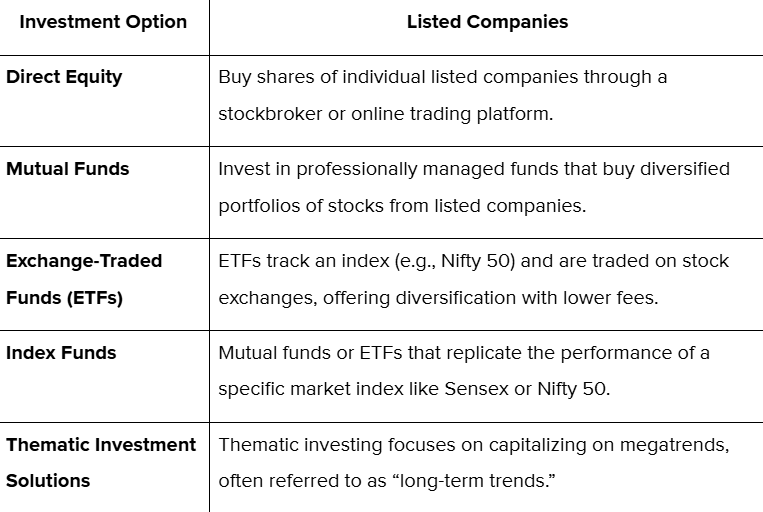
Investment Options in Listed Companies
If you're looking to invest in listed companies, there are several ways to gain exposure to the stock market. Here are some of the most common investment options:
Now that we’ve covered listed companies, let’s turn to the investment options in unlisted public companies.
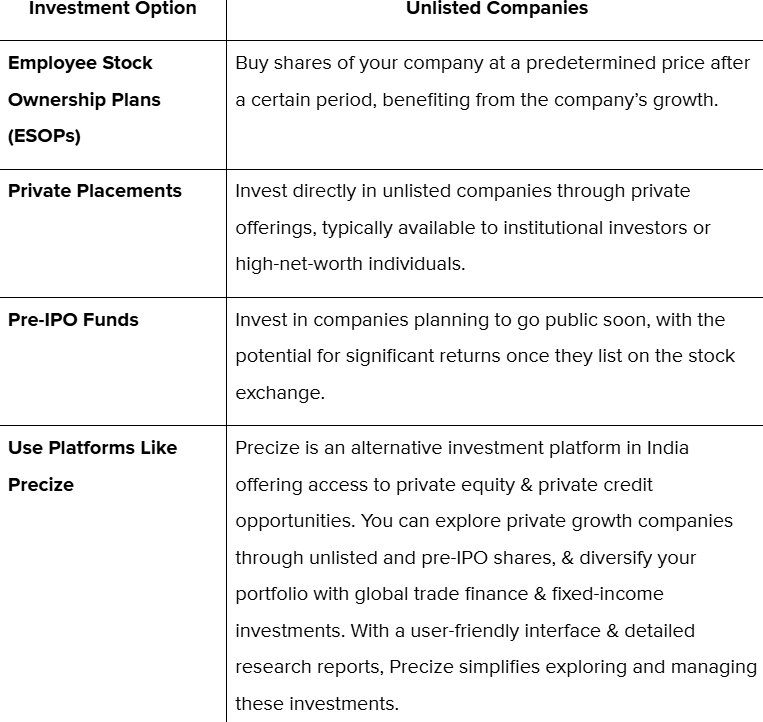
Investment Options in Unlisted Companies
Investing in unlisted companies offers different opportunities. Here are some of the main ways you can invest in unlisted companies:
Conclusion
Investing in listed public companies offers liquidity, transparency, and regulated environments, making them ideal for those seeking stable, lower-risk investments.
On the other hand, unlisted public companies are often in their growth stages, which means they can provide higher returns if they perform well or eventually get listed.
These differences are important in deciding where to allocate investments based on financial goals and risk appetite. Unlisted public companies may present more rewarding opportunities for those seeking higher potential returns with a higher level of risk.
If you're interested in exploring unlisted shares, Precize simplifies the process, offering access to buy and sell unlisted stocks with comprehensive market insights, research, and trends. Reserve your access now to start exploring the potential of unlisted shares with Precize & to diversify your portfolio.