
What Is Chennai Super Kings Cricket?
Chennai Super Kings Cricket is the corporate vehicle that owns and operates the Chennai Super Kings franchise in the Indian Premier League (IPL). In plain terms, it is the business behind a sports-and-entertainment brand that competes seasonally, monetizes attention across TV and digital, and signs commercial partnerships the way any premium consumer asset would.
Revenue levers investors usually discuss include:
Central pool economics tied to IPL broadcasting and digital rights cycles.
Sponsorship and brand partnerships on jerseys, stadium assets, and digital surfaces.
Merchandise and licensing income where fan demand converts to SKU sales.
Match-day and activation style promotions that vary by season and calendar.
If you are comparing franchise exposure with a typical listed consumer name, remember the cadence: a T20 league is event-driven, and cash flows can look lumpy across financial years even when the brand feels evergreen.
CSK Unlisted Share Price in 2026: What the Snapshot Shows
Private-market CSK unlisted shares get attention because IPL valuations in India have climbed in media narratives, and retail plus HNI wallets are hunting differentiated pre-IPO stories. Screens help you see directional demand; they do not replace issuer disclosures for your specific lot.
Current CSK Unlisted Share Price Snapshot
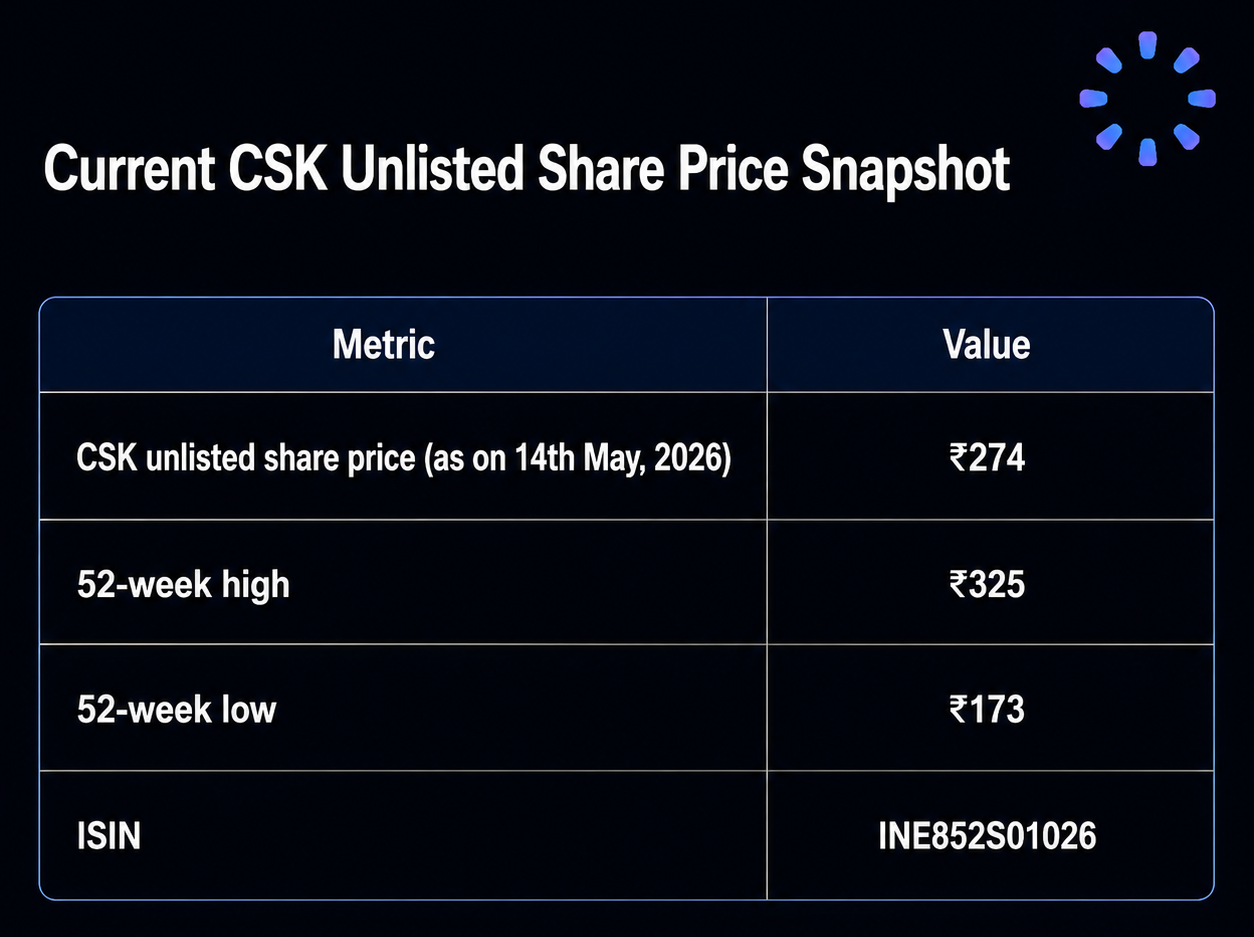
A wide 52-week band is common when liquidity is thin and headlines swing sentiment. If you want a primer on how listed tape differs from private prints, read Unlisted vs listed shares in 2026 on the Precize blog, then return to CSK with cleaner expectations on settlement and price discovery.
Why Investors Care About CSK Unlisted Shares
1. Brand that travels beyond a single city.
CSK is one of the most recognized IPL identities in India, with fan loyalty that shows up in viewership, merchandise, and sponsor demand during the season.
2. Scarcity of listed comps.
There is no clean BSE/NSE ticker that maps one-to-one to a single IPL team for retail investors. That structural scarcity can push private-market premiums when access platforms improve.
3. Sports economy tailwinds.
Digital consumption, ad budgets, and rights inflation are long-cycle stories in Indian media. Franchises sit close to where attention aggregates for two months every year, then monetize off-season through brand deals.
4. Optionality around future monetisation.
Markets often price call-like narratives: a future IPO, strategic investor, partial stake sale, or other corporate action. Narrative is not contract; it is a reason volatility can run hot.
If you are building a watchlist of private names, the Precize Screener is a practical place to compare CSK with other pre-IPO liquidity and research tiles side by side.
Is a CSK IPO Expected?
No official timetable is confirmed as of this update.
IPO rumors can be loud because sports assets attract headline writers, but listing requires board intent, shareholder steps, legal structure, and SEBI processing that outsiders only verify through public filings.
What serious buyers watch for instead of Twitter threads:
Draft Red Herring Prospectus (DRHP) availability on SEBI systems, with risk factors you can quote line by line.
Use of proceeds language that tells you whether the offer is mostly OFS (existing holders selling) or includes a fresh issue leg.
Lock-in and corporate governance disclosures that explain who can sell when after listing.
Until those exist, treat IPO as speculation. If you want a parallel read on how OFS-heavy stories behave in headline markets, see NSE IPO OFS: India's most awaited listing on Precize; the lesson is not "the same will happen," but "read the prospectus before you anchor returns."
Risks to Understand Before You Size a Position
League and performance concentration.
A large share of value sits inside IPL seasonality, team performance, squad transitions, and rights cycles that can reset economics when contracts roll.
Liquidity and exit risk.
Unlisted books do not promise a bid every day. You may wait for a matched seller, accept wider spreads, or face quiet periods when news flow is flat.
Mark-to-model volatility.
Private prints can gap on small trades. A ₹325 screen high and ₹173 low in the same year is a reminder that marks are path-dependent, not smooth.
Regulatory and governance overhangs.
Sports is visible to policymakers and public opinion. League rules, conflict issues, and broadcast regulation can all influence sponsor appetite faster than equity models assume.
Tax and holding-period reality.
Long-Term Capital Gains (LTCG) and Short-Term Capital Gains (STCG) rules for unlisted shares can differ from listed equities on holding period thresholds and rates; rules change with Budget cycles. This article does not give tax advice; verify with your chartered accountant.
For platform mechanics and common investor questions, start with Precize FAQs and escalate anything account-specific through Precize Care.
How to Buy CSK Unlisted Shares on Precize
The flow mirrors how Precize opens other private-market tickets: identity checks first, then order economics, then settlement to CDSL/NSDL demat.
Register and finish KYC.
Create your profile, verify PAN, and connect an active demat account. Keep Aadhaar-linked mobile handy for OTP steps.Find the company tile.
Search Chennai Super Kings Cricket Limited or CSK in the unlisted section. Review indicative price, lot hints, and any research attachments the product surfaces.Read before you click buy.
Build a simple checklist: last financials you trust, share count context if disclosed, peer IPL economics at a high level, and your liquidity budget (assume slow exits).Place the order.
Pick quantity, review fees and gross outlay, and confirm the summary screen. If anything reads vague, pause and ask support for a written clarification on settlement timelines.Pay using supported rails.
UPI, net banking, or bank transfer are typical; follow the payment instructions exactly so reconciliation is clean.Wait for demat credit.
Transfer timing depends on seller availability, counterparty checks, and depository processing. It is not always parallel to exchange T+1 logic.
Bottom Line
CSK unlisted shares sit at the intersection of India's IPL economics and private-market access. The brand is real, the commercial model is understandable, and platforms like Precize have made discovery easier than the old offline whisper networks.
What has not changed is the fine print: illiquidity, uncertain IPO timelines, and lumpy cash flows mean you should size like an illiquid alternative, not like a large-cap Nifty name.
If you want to explore CSK next to other pre-IPO ideas with research tiles and history, open the Precize Screener and build a shortlist you can defend in two paragraphs of your own words.
FAQ: CSK Unlisted Share Price and Buying Basics
1. Can I buy CSK shares without a demat account?
No. Unlisted equity settles into a demat account at CDSL or NSDL. If you are new to depositories, read demat account features and benefits on Precize, then return to the order flow.
2. Does buying CSK unlisted shares guarantee IPO shares later?
No. IPO allocations follow prospectus rules for retail, QIB, and NII buckets. Pre-IPO holdings can still be valuable or volatile around listing, but they are not a promise of oversubscribed allotment.
3. Why is the 52-week range so wide?
Thin liquidity plus headline beta means a small number of trades can print prices far from the last deal you personally would clear at.
4. Is CSK a good investment in 2026?
This article does not rank investments. CSK is a rare consumer sports asset in India's private market, which is exactly why valuation and risk deserve homework, not FOMO.
Disclaimer: This content is for informational purposes only and does not constitute investment advice. Investing in unlisted shares involves risks including illiquidity and potential loss of capital. Consult a qualified financial advisor before making investment decisions. Precize is not a stock exchange and is not regulated by SEBI. This is not a recommendation to buy or sell shares of Chennai Super Kings Cricket. Do your own research before investing.