
Indian investors are increasingly exploring opportunities beyond conventional markets. As the financial ecosystem evolves, understanding the dynamics of listed vs. unlisted companies has become essential for making smarter, diversified investment decisions.
For many, listed shares offer liquidity and transparency, while unlisted investments bring access to early-stage growth. However, their structures, risks, and returns differ greatly.
This guide explains both categories in depth, helping investors balance regulation, opportunity, and long-term wealth creation.
Key Takeaways
Listed companies provide liquidity and transparency, making them suitable for investors seeking regulated, stable, and easily tradable opportunities.
Unlisted companies offer early-stage growth potential, appealing to investors comfortable with longer holding periods and higher risk.
Regulatory oversight differs greatly, with SEBI governing listed entities and the Companies Act overseeing unlisted ones.
A balanced portfolio combining both asset types enhances diversification, risk distribution, and long-term wealth creation.
Understanding listed vs unlisted companies helps investors make informed decisions aligned with their financial goals and investment horizon.
What Is a Listed Company?
A listed company is one whose shares trade on recognized exchanges, such as NSE or BSE. These organizations open ownership to the public, allowing investors to buy, sell, or hold equity freely.
Such companies comply with the Securities and Exchange Board of India (SEBI) regulations and exchange disclosure requirements. Listing improves credibility, enabling firms to raise capital efficiently and expand across domestic and international markets.
Now that you understand what a listed company is, let’s explore the defining features that make it accessible and transparent to investors.
5 Features of a Listed Company
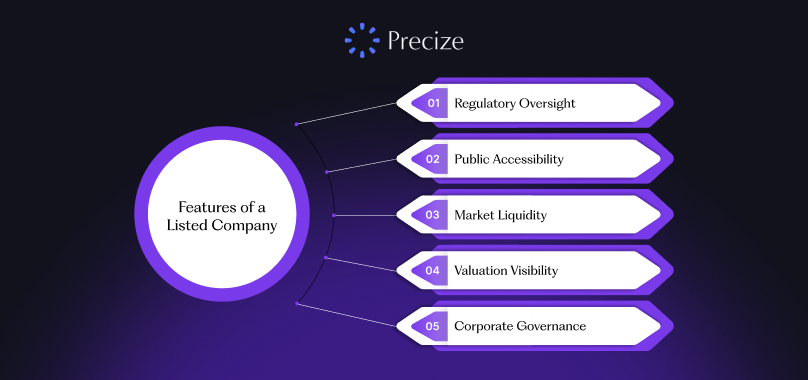
Before investing, it is vital to understand what sets listed firms apart. These features define their reliability, governance, and accessibility to investors.
Regulatory Oversight: Listed companies operate under strict SEBI guidelines and exchange regulations. They must publish quarterly reports, disclose key decisions, and adhere to audit standards for full investor transparency.
Public Accessibility: Shares are freely traded through brokers or online platforms. Retail and institutional investors can purchase stock at market prices, promoting inclusivity and wide participation.
Market Liquidity: Continuous buying and selling on exchanges ensures fair value discovery. Investors can easily exit positions, a major advantage over private equity investments.
Valuation Visibility: Market performance determines share price. Analysts and investors evaluate data continuously, allowing accurate assessments of financial health and growth potential.
Corporate Governance: Listed firms must appoint independent directors, maintain board accountability, and comply with CSR norms. These measures protect stakeholder interests and improve investor confidence.
These features bring clear advantages but also certain challenges. Here’s how the pros and cons shape investment decisions in listed shares.
Pros and Cons of Listed Shares
While investing in listed stocks offers several advantages, it also introduces market-driven challenges. Understanding both aspects ensures realistic expectations and balanced portfolio strategies.
Advantages:
High Liquidity: Investors can sell holdings anytime during trading hours, converting equity into cash instantly. This flexibility supports short-term needs and reduces lock-in risk.
Transparent Reporting: Regular updates, earnings calls, and public disclosures make it easier to track company performance and adjust investment decisions.
Diversification Ease: Listed shares can be accessed through ETFs, index funds, or mutual funds, allowing low-cost exposure to multiple industries.
Dividend Income: Investors benefit from periodic dividends, buybacks, and potential capital appreciation, supporting long-term wealth building.
Disadvantages:
Market Volatility: Prices fluctuate with economic conditions, global trends, or investor sentiment, sometimes unrelated to company fundamentals.
Compliance Burden: Firms incur significant costs in maintaining listing standards, affecting profitability in competitive markets.
Short-Term Speculation: Retail investors often react impulsively to market movements, leading to suboptimal decisions.
For those comparing listed vs. unlisted companies, these trade-offs underline why listed assets remain favored by investors prioritizing transparency and liquidity.
Understanding the benefits and risks sets the stage for learning how to invest strategically in listed companies.
How to Invest in a Listed Company?
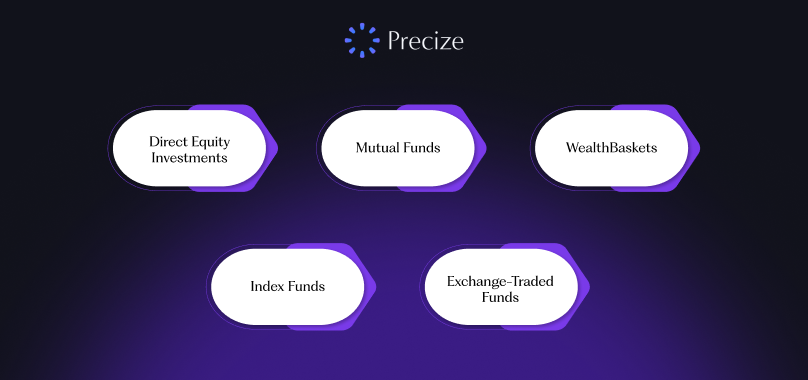
Investing in listed companies has become easier with digital platforms and real-time access to data. Investors can participate through multiple instruments based on risk appetite and time availability.
Direct Equity Investments
Direct investments allow full control. Investors analyze balance sheets, management performance, and price trends before purchasing shares through a Demat account. It is ideal for professionals with time to monitor markets regularly.
Mutual Funds
Mutual funds pool investor capital and diversify across sectors. Experienced fund managers make allocation decisions, minimizing individual stock risk while maximizing portfolio stability.
WealthBaskets
WealthBaskets provide thematic investment bundles like EVs, renewable energy, or fintech. They enable retail investors to align portfolios with personal interests or future-focused industries.
Index Funds
These funds replicate major indices such as NIFTY 50 or Sensex. They deliver consistent, long-term returns with minimal management cost, making them suitable for salaried professionals.
Exchange-Traded Funds (ETFs)
ETFs merge the advantages of mutual funds with stock-like liquidity. They trade throughout the day and suit busy SaaS or IT professionals who prefer automation and minimal tracking.
These options help investors gain regulated, diversified exposure without dealing with the complexity of private placements or direct unlisted deals.
While investing in listed companies offers liquidity, Precize gives you access to exclusive opportunities like Pre-IPO shares and global trade finance investments. With Pre-IPO shares, you can invest in promising companies before they go public, building wealth early. Global trade finance lets you earn consistent returns in short cycles (30-60 days), offering a stable alternative to traditional fixed-income assets.
While listed companies are public, many promising opportunities exist privately. Let’s look at what defines an unlisted company.
What Is an Unlisted Company?
Unlisted companies are privately held firms whose shares are not traded on public exchanges. They remain owned by founders, venture capitalists, or private equity investors.
Such entities often operate in emerging industries, fintech, mobility, or clean energy, seeking rapid growth before going public. While they lack liquidity, they provide high-potential entry points for long-term investors.
Once defined, it’s important to understand the operational and ownership features that distinguish unlisted firms.
5 Features of an Unlisted Company
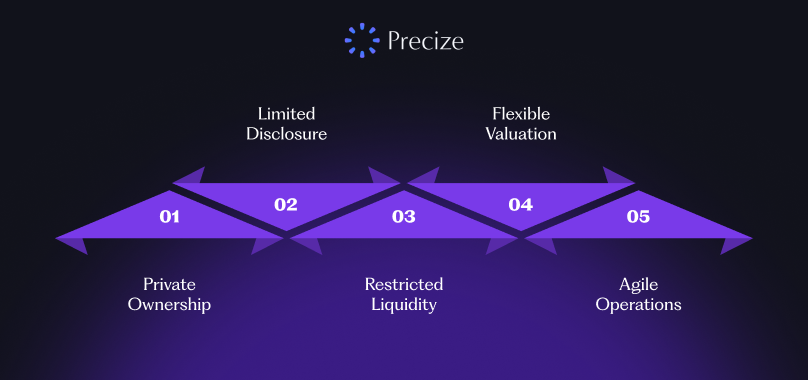
Unlisted companies differ significantly from their listed counterparts in structure, accessibility, and valuation.
Private Ownership: Shares remain within a closed network of investors, founders, and employees. This exclusivity offers greater control but limits outside participation.
Limited Disclosure: Unlisted firms are not required to share quarterly earnings or detailed balance sheets. Investors rely on private agreements and internal data.
Restricted Liquidity: Share transfers happen through negotiated deals or buybacks, often requiring extended holding periods before realizing returns.
Flexible Valuation: Price is determined by investor demand, future potential, and negotiation, not daily trading activity.
Agile Operations: Fewer regulatory layers allow quicker decision-making, product development, and adaptation to changing market dynamics.
These features create both opportunities and limitations for investors. Here’s a closer look at their advantages and drawbacks.
Pros and Cons of Unlisted Shares
Investing in unlisted shares offers both unique opportunities and distinctive challenges. Recognizing them helps investors plan appropriately.
Advantages:
Early Access to Growth: Investors can enter during initial funding rounds, capturing exponential returns when the firm lists.
Diversification: Exposure to startups and private businesses reduces dependence on public market cycles.
Control and Negotiation: Terms can include preferential shares, board participation, or strategic alliances.
Potential for High Returns: Valuations can multiply if the company scales successfully or gets acquired.
Disadvantages:
Low Liquidity: Exiting positions can take months or years, limiting flexibility.
Opaque Valuation: Limited disclosures make price verification challenging, requiring expert due diligence.
Regulatory Ambiguity: Private deals involve higher counterparty and governance risks.
A mixed approach to listed vs. unlisted companies balances safety from public markets with the innovation potential of private ventures.
After weighing the pros and cons, let’s discuss the most common ways to invest in unlisted companies securely.
How to Invest in an Unlisted Company?
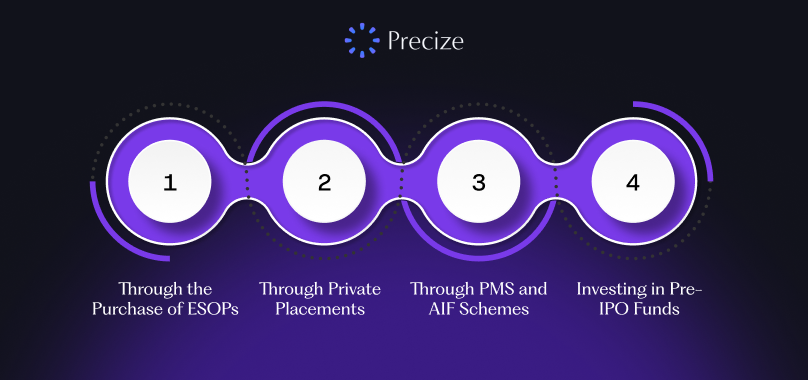
Participation in unlisted shares demands strategic entry and reliable intermediaries. Several structured avenues allow investors to access private equity opportunities securely.
1. Through the Purchase of ESOPs
Employees can acquire shares via Employee Stock Ownership Plans. As the company grows, ESOP value appreciates, offering significant returns during buybacks or IPOs.
2. Through Private Placements
Accredited investors can directly buy equity from promoters through regulated private deals. This method offers exclusivity but requires strong legal and financial advisory support.
3. Through PMS and AIF Schemes
Portfolio Management Services (PMS) and Alternative Investment Funds (AIFs) provide professional management, diversification, and access to curated unlisted assets vetted for compliance and potential.
4. Investing in Pre-IPO Funds
Pre-IPO funds pool resources to invest in companies nearing public listing. These vehicles help investors capture potential valuation appreciation upon market debut.
With both categories understood, this comparison table highlights their key differences side by side.
Difference Between Listed and Unlisted Companies
Understanding the contrast between both categories is essential for informed portfolio diversification. The following table outlines the main distinctions.
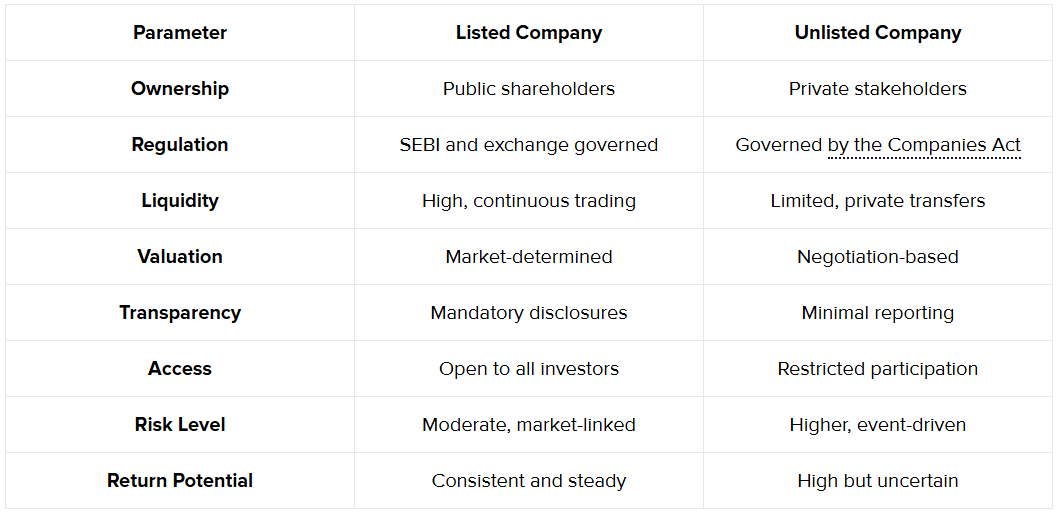
This side-by-side comparison helps investors understand the functional and regulatory differences between listed vs. unlisted companies. By reviewing these distinctions, investors can identify which approach best aligns with their goals, liquidity needs, and risk tolerance.
Conclusion
Understanding the difference between listed vs. unlisted companies enables investors to balance risk, liquidity, and long-term growth. Listed entities provide stability, compliance, and accessibility, while unlisted investments deliver early-stage value creation and strategic exclusivity.
For Indian retail investors, exploring private markets through regulated channels enhances diversification and future-readiness. Financial advisors and institutions can use these insights to design adaptive, research-based strategies aligned with global standards.
If you’re ready to go beyond traditional investments, Precize makes it possible. The platform helps investors access Pre-IPO shares and global trade finance opportunities, two powerful ways to diversify and grow wealth. Invest in unlisted companies before they go public, or earn steady returns through short-term trade finance cycles of 30–60 days.
With in-depth research tools and insights into financial performance, Precize ensures every investor, from professionals to institutions, can make informed, transparent decisions.
Reserve your access with Precize and start your journey into private markets today with a minimum investment of just ₹10,000.
FAQs
Can retail investors buy unlisted company shares directly?
Retail investors can access unlisted shares through SEBI-registered intermediaries, pre-IPO platforms, or Alternative Investment Funds that facilitate secure private placements.
Why are unlisted companies considered riskier investments?
Unlisted companies lack public disclosures and regular valuation data, making their performance harder to assess. Returns depend on business growth, exit timing, and market liquidity.
What happens when an unlisted company goes public?
When an unlisted company lists, existing shareholders gain liquidity. Share prices are determined by market demand, allowing early investors to realize significant capital gains.
How are listed companies regulated differently from unlisted firms?
Listed companies follow SEBI and exchange regulations, mandating disclosures and audits. Unlisted firms comply only with the Companies Act, offering lower transparency and accountability.
Are unlisted investments suitable for short-term goals?
No. Unlisted shares are illiquid and better suited for long-term investors seeking high growth potential through patient holding rather than quick market exits.
Disclaimer
The information presented in this article is intended to provide a general understanding of the differences between listed and unlisted companies. While every effort has been made to ensure the accuracy and timeliness of the content, it is meant for educational and informational purposes only. Investment decisions should not be based solely on the material shared here, as financial markets and regulatory environments are subject to change. Readers are encouraged to verify details independently and consult qualified financial advisors or professionals before making any investment or business decisions.